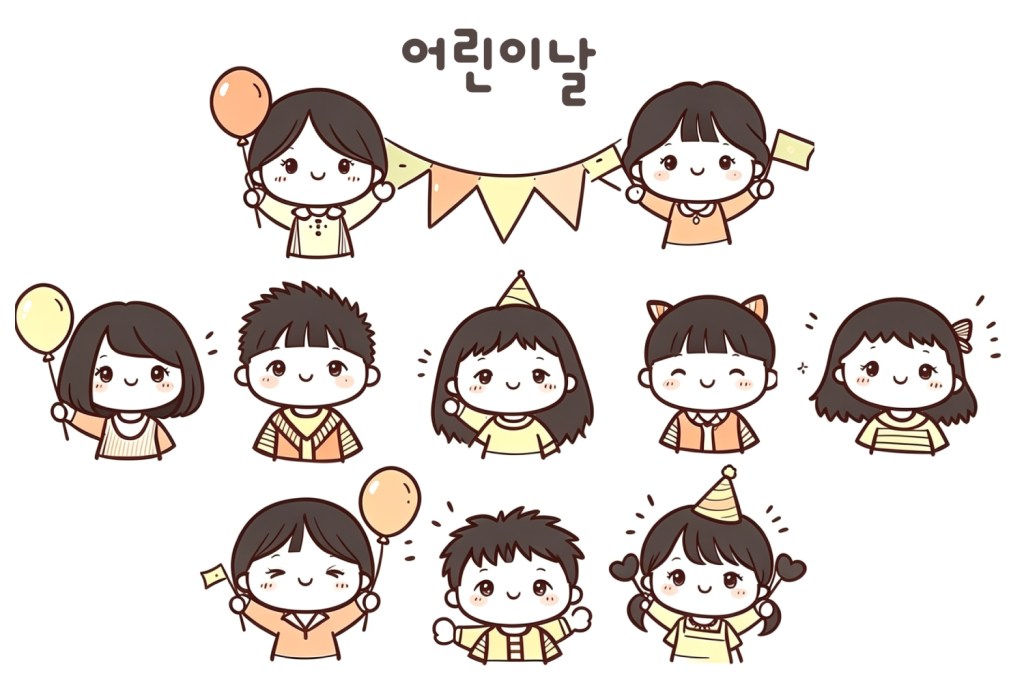
ESP – Cada año, el 5 de mayo en Corea del Sur se celebra «어린이날», el Día del Niño.
Este día se considera un festivo nacional, por lo que la mayoría de personas ni trabajan ni van al colegio. Y es habitual ver a las familias disfrutando tiempo juntos en los parques, zoológicos y otros eventos creados especialmente para los más pequeños. También se suele dar un regalo a los niños (juguetes, videojuegos, libros o incluso dinero).
Además quiero contarte del origen de esta celebración. Y es que se remonta al año 1923, impulsado por el educador y escritor coreano Bang Jeong-hwan, quien promovía el respeto y la importancia de la infancia.
En su época, los niños eran vistos más como “adultos en pequeño” o incluso como mano de obra.
Bang Jeong-hwan introdujo una idea bastante avanzada para su tiempo: que los niños debían ser tratados con respeto, dignidad y cuidado. Incluso popularizó el término coreano “어린이” (niño) como una forma respetuosa de referirse a ellos.
Aunque en otros países también es habitual celebrar el Día del Niño, en Corea del Sur es especialmente importante y muy celebrado. Y ahora te cuento porqué.
El 어린이날 y la baja natalidad están conectados más de lo que parece, aunque de forma indirecta.
Corea del Sur tiene una de las tasas de natalidad más bajas del mundo. Es por eso que en este contexto, este día refleja y también pone en evidencia varios cambios sociales.
– Menos niños, más “valor” simbólico
Al haber menos nacimientos, cada niño recibe más atención, recursos y cuidado. Se refuerza la idea de que tener hijos es una gran responsabilidad.
– Coste de criar a los hijos
El propio espíritu del día (regalos, ocio, experiencias) refleja una realidad más amplia. Criar hijos en Corea del Sur es caro (educación, actividades, vivienda). Esto contribuye a que muchas parejas decidan tener menos hijos o ninguno.
– Cambio de valores sociales
Históricamente, tener varios hijos era común. Pero hoy en día eso ha cambiado. Se da prioridad a la carrera profesional ya que hay inestabilidad laboral. También hay dificultades para conciliar el trabajo y la familia.
En esta celebración el gobierno aprovecha para promover políticas familiares. Concienciar sobre la importancia de la infancia.
Sin embargo, estas iniciativas no han logrado revertir significativamente la baja natalidad.
Todo esto hace que tener es hijos en esta sociedad se convierta en una decisión muy meditada, y de ahí la importancia de celebrar 어린이날.

ENG – Every year on May 5th in South Korea, “어린이날” (Children’s Day) is celebrated.
This day is considered a national holiday, so most people neither work nor go to school. It’s common to see families spending time together in parks, zoos, and at events specially organized for children. Gifts are also typically given, such as toys, video games, books, or even money.
I’d also like to tell you about the origin of this celebration. It dates back to 1923 and was promoted by the Korean educator and writer Bang Jeong-hwan, who advocated for respect and the importance of childhood.
In his time, children were often seen as “small adults” or even as a source of labor. Bang Jeong-hwan introduced a rather advanced idea for that era: that children should be treated with respect, dignity, and care. He even popularized the Korean term “어린이” (child) as a respectful way to refer to them.
Although Children’s Day is celebrated in many countries, it is especially important and widely celebrated in South Korea. And here’s why.
Children’s Day and low birth rates are more connected than they might seem, although indirectly. South Korea has one of the lowest birth rates in the world. In this context, the holiday reflects and highlights several social changes.
– Fewer children, greater “symbolic value”
With fewer births, each child receives more attention, resources, and care. This reinforces the idea that having children is a major responsibility.
– Cost of raising children
The spirit of the day itself (gifts, leisure, experiences) reflects a broader reality. Raising children in South Korea is expensive (education, activities, housing), which contributes to many couples deciding to have fewer children or none at all.
– Changing social values
Historically, having several children was common. Today, this has changed. Career development is prioritized, partly due to job instability, and there are also difficulties balancing work and family life.
During this celebration, the government also takes the opportunity to promote family policies and raise awareness about the importance of childhood. However, these initiatives have not significantly reversed the low birth rate.
All of this makes having children in this society a very carefully considered decision, which helps explain the importance of celebrating 어린이날.






 onetasteofkorea.com
Deja un comentario