

ENG – Today we will learn a few basic korean words that will be useful for everyday situations in a first trip to South Korea.
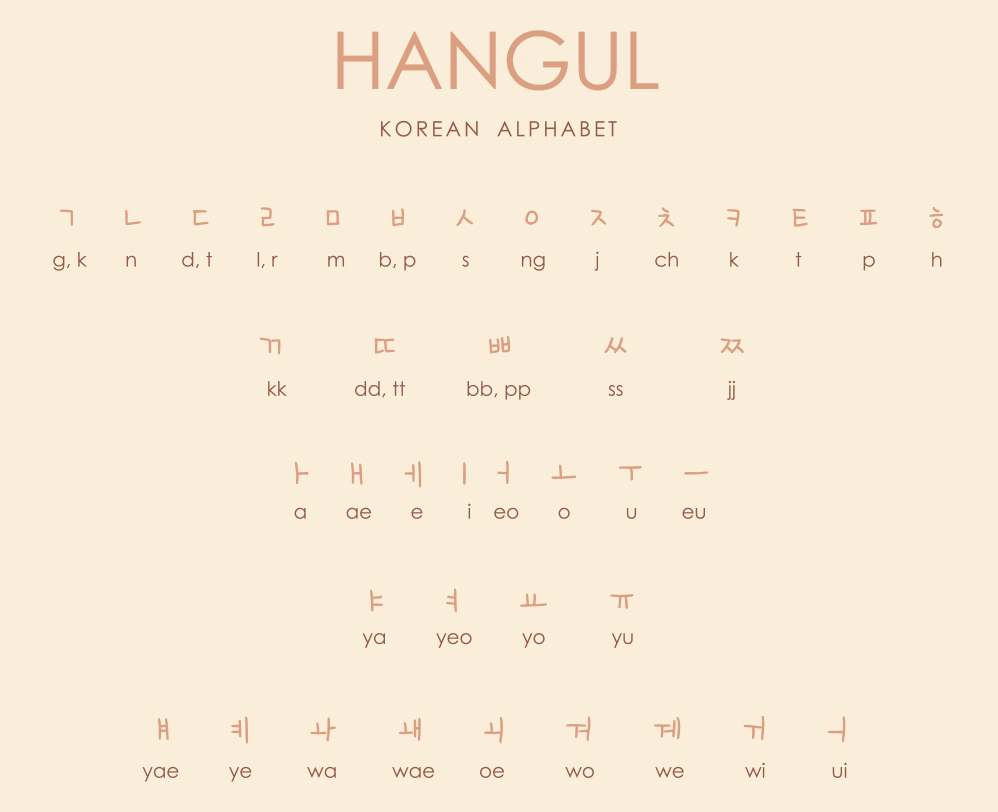
But first of all, we should become a little familiar with Hangul (korean alphabet).
It’s quite simple to learn (it will only take you a few hours to memorize), and although I don’t recommend using romanization, in this post I will include it to make it easier (but be aware that some sounds don’t exist in other languages).
Basic Korean Words for Beginners
1. Hello
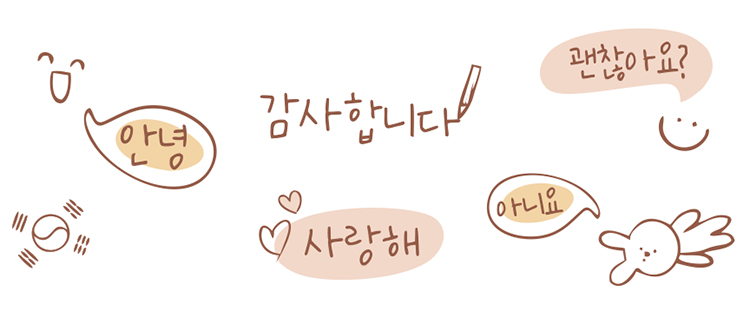
안녕하세요
(an-nyeong-ha-se-yo)
This type of greeting is quite formal, and can be used for any situation.
If you are talking to a very close friend, you may use the casual version 안녕 (an-nyeong), but remember this is very informal and not suitable for everyone (hierarchy is a big deal in South Korea).
2. Nice to meet you
반갑습니다 / 반가워요
(ban-gap-sum-ni-da) (ban-ga-uo-yo)
3 . Thank you.
감사합니다
(gam-sa-hab-ni-da)
There are more ways to say thank you in korean, but this formal way is commonly used and appropriate for most situations.
4. Yes / No
네 – 아니요
(ne) (a-ni-yo)
5. I don’t know
몰라요
(mol-la-yo)
6. Are you ok? Yes, I’m ok.
괜찮아요? 네, 괜찮아요
(gwaen-chan-a-yo?) (ne-gwaen-chan-a-yo)
7. I’m sorry
죄송합니다 / 미안합니다
(Joe-song-hab-ni-da / Mi-an-ham-ni-da)
8. Excuse me (getting attention)
여기요 / 잠시만요
(jo-gi-yo) (cham-shi-mahn-yo)
9. Please give me
주세요
(ju-se-yo)
10. Goodbye (when I stay, when I go)
안녕히 가세요 / 안녕히 계세요
(an-nyeon-hi ga-se-yo) (an-nyeon-hi ge-se-yo)
Palabras básicas en coreano para principiantes
ESP – Hoy vamos a aprender algunas palabras básicas en coreano, que nos serán muy útiles en un primer viaje a Corea del Sur.
Pero lo primero es familiarizarse un poco con el Hangul (alfabeto coreano). Es bastante sencillo de aprender (solo te tomará un par de horas memorizarlo), y aunque no se recomienda utilizar la romanización para aprender coreano, en este post sí que lo incluiremos para que te resulte más fácil (pero ten en cuenta que algunos sonidos no existirán en otros idiomas).
1. Hola
안녕하세요
(an-nyeong-ha-se-yo)
Este tipo de saludo es bastante formal, y es adecuado para utilizar en muchas situaciones.
Si estás hablando con un amigo cercano, puedes usar la versión más informal
안녕 (an-nyeong), pero recuerda que este tipo de lenguaje no es apropiado para usar con todas las personas (la jerarquía es un tema de importancia en Corea).
2. Encantado de conocerte
반갑습니다 / 반가워요
(ban-gap-sum-ni-da) (ban-ga-uo-yo)
3 . Gracias
감사합니다
(gam-sa-hab-ni-da)
Hay más formas de decir gracias en coreano, pero esta manera formal es la más adecuada para todo tipo de situaciones.
4. Sí / No
네 – 아니요
(ne) (a-ni-yo)
5. No lo sé
몰라요
(mol-la-yo)
6. ¿Estás bien? Sí, estoy bien.
괜찮아요? 네, 괜찮아요
(gwaen-chan-a-yo?) (ne-gwaen-chan-a-yo)
7. Lo siento / Perdón.
죄송합니다 / 미안합니다
(Joe-song-hab-ni-da / Mi-an-ham-ni-da)
8. Disculpe (para llamar la atención)
여기요 / 잠시만요
(jo-gi-yo) (cham-shi-mahn-yo)
9. Por favor, dame…
주세요
(ju-se-yo)
10. Adiós (cuando me quedo, cuando me voy)
안녕히 가세요 / 안녕히 계세요
(an-nyeon-hi ga-se-yo) (an-nyeon-hi ge-se-yo)



 onetasteofkorea.com
Deja un comentario